Studey features
Learn with Studey
See how ideas connect with AI mind maps
A mind map can make a dense topic easier to scan. Studey helps organize concepts and their relationships into a visual map you can explore as you learn.
View the app preview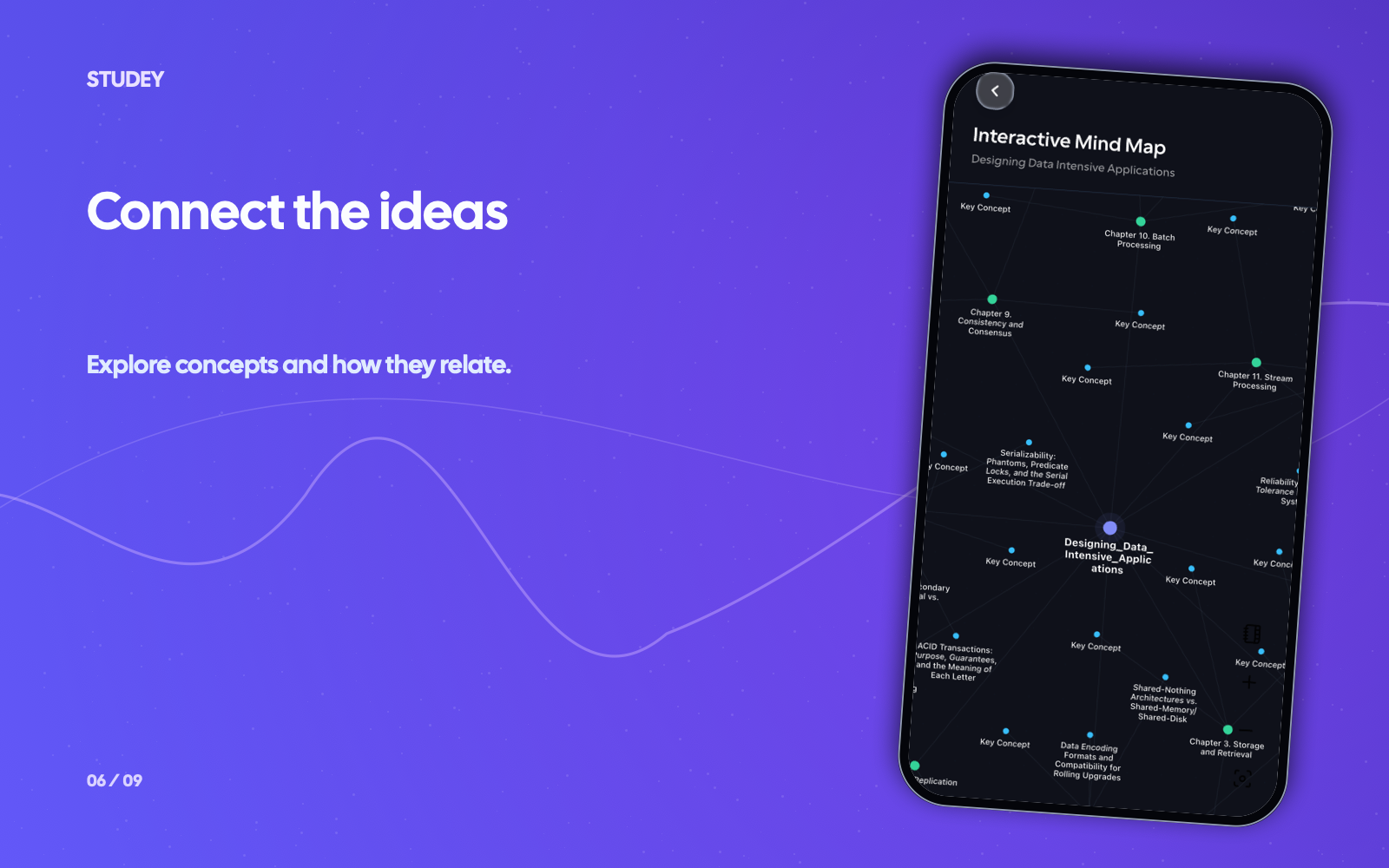
Connect ideas across a topic
Use a visual map to move from a central topic to related ideas, notice how concepts fit together, and get a clearer overview before reviewing the details.
- See related concepts in one view
- Explore a topic from its main idea outward
- Use visual structure alongside your notes
Questions about mind maps
- Can Studey turn my materials into a mind map?
- Studey’s mind map tool organizes ideas from your materials visually. Review the relationships in the map against your source, then use questions or flashcards to check details you want to remember.
- How should I use a mind map to understand a topic?
- Start with a central topic, follow its branches to related ideas, and note the relationships you need to explain. Then cover the map and try to reconstruct it from memory, checking your notes for gaps.
- Are mind maps better than outlines?
- Neither format is best for every topic. A mind map makes relationships and branches visible; an outline makes a hierarchy easy to scan. Choose the one that helps you explain the structure of the material.
- Do mind maps replace flashcards or practice questions?
- No. A map helps you see an overview and connections, while flashcards and quizzes ask you to retrieve specific information. Pair them when you need both a big-picture view and detailed practice.